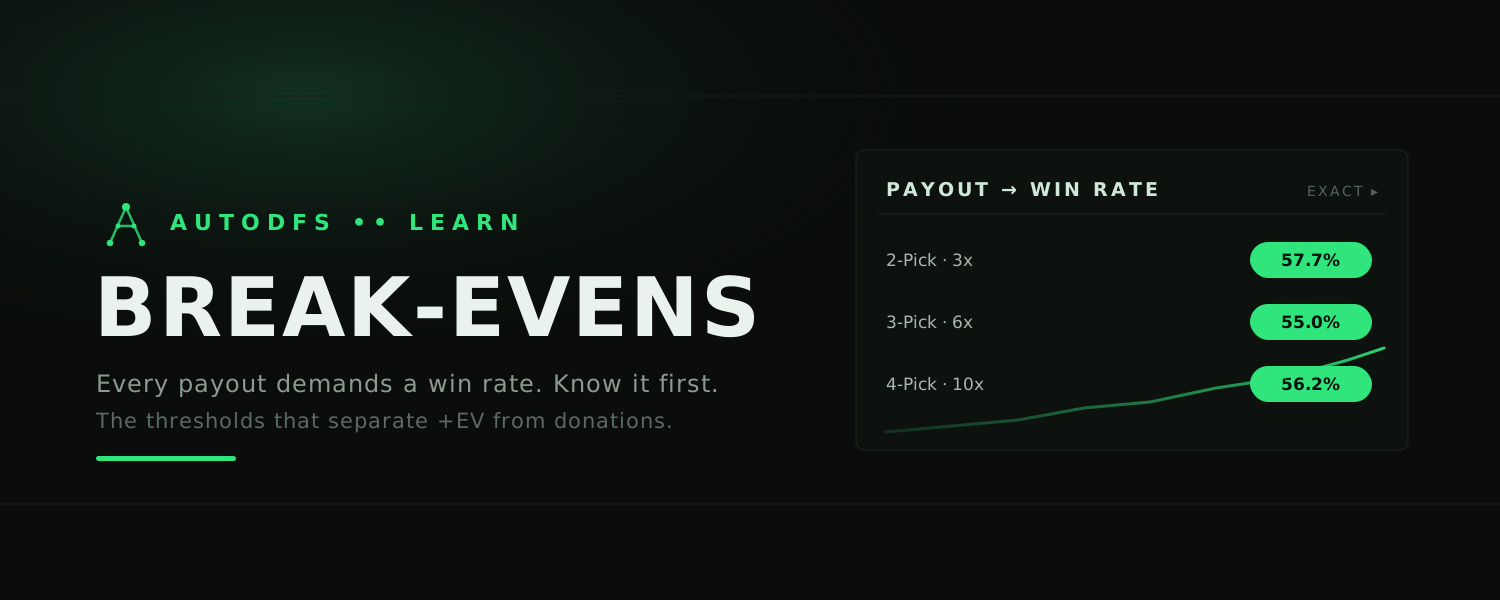
Multipliers are marketing; break-even win rates are math. Every payout structure demands a specific per-leg win rate before it returns a single expected dollar. Know the thresholds and half of DFS strategy becomes automatic.
The core table
- 2-pick, 3x — needs 57.7% per leg ((1/3)^(1/2)).
- 3-pick, 6x — needs 55.0% per leg ((1/6)^(1/3)).
- 4-pick, 10x — needs 56.2% per leg ((1/10)^(1/4)).
- Flex / insured structures — partial payouts on one miss lower the effective threshold, but the exact math requires summing every outcome (that's the Poisson-binomial calculation the terminal runs for you).
Why this changes how you pick
A coin-flip leg (50%) in a 3-pick 6x entry is not neutral — it is −9% EV on its own. The app's edge lives in the space between 50% ("feels fine") and 55% ("actually break-even"). Most casual entries live in that dead zone, which is why the apps can pay 6x at all.
Same line, different verdicts
Because each app has its own structures, one player line can be +EV on one app and −EV on another. A 58% leg clears a 55% threshold comfortably but barely beats a 57.7% one. AutoDFS grades every line against the break-even of the specific app tab you're viewing — the same prop will show different EV% on different tabs, and that is correct.
Flex entries deserve real math
Insured or flex structures (partial payout on a single miss) cannot be graded with shortcuts. The terminal computes the exact distribution of outcomes for your specific legs — every combination of hits and misses, weighted by each leg's fair probability — so the EV you see is the EV you actually hold.